

Hospital-to-Home Transition Services in Fremont
Hospital-to-Home Transition Services
Returning home after a hospital stay can be both relieving and overwhelming. Many older adults feel weaker, more fatigued, or uncertain about what daily activities they can safely manage. Families often face questions about medications, mobility, follow-up appointments, and the risk of another hospitalization.
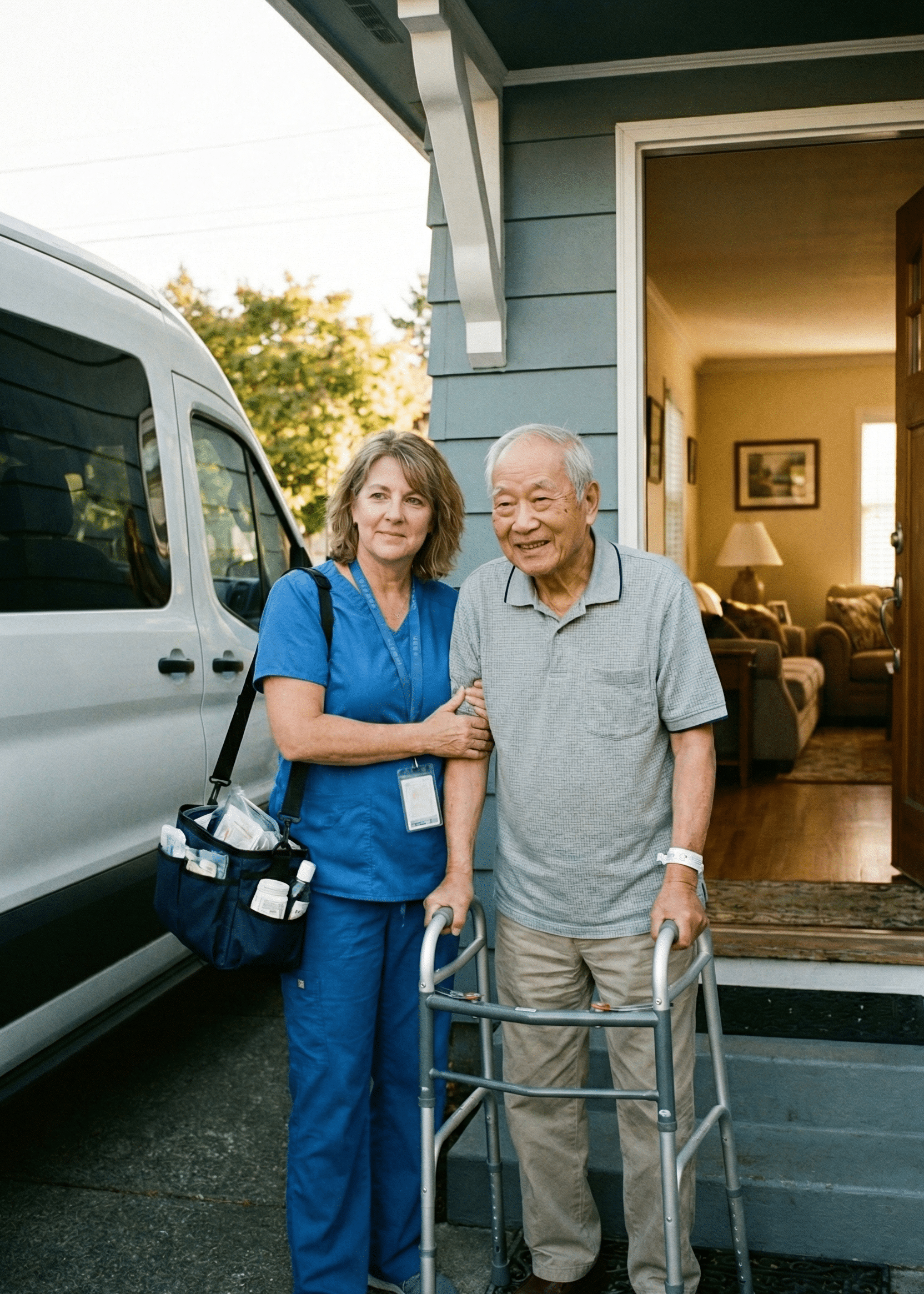
Assisting Hands Fremont provides hospital-to-home transition care in Fremont for seniors recovering after surgery, illness, injury, or rehabilitation. Our caregivers help with mobility, personal care, meal preparation, medication reminders, fall prevention, and daily support to make the return home safer and less stressful.
Our caregivers serve families throughout Fremont, Newark, Union City, Hayward, Palo Alto, Pleasanton, Dublin, San Jose, and the surrounding SF Bay Area.

Why Hospital-to-Home Care Matters
A transition home from the hospital is a vulnerable moment. The CDC reports that nearly one in five older adults is readmitted within thirty days. Many of these readmissions are preventable and occur due to missed medications, falls, dehydration, unmanaged symptoms, or lack of follow-up care.
Hospital-to-Home services dramatically reduce these risks by providing:
- Safe transportation home
- Help settling in and organizing the environment
- Medication reminders and understanding new prescriptions
- Mobility assistance to prevent falls
- Meal preparation for recovery
- Monitoring for warning signs
- Communication with families
This kind of support improves comfort, confidence, and healing.
A Real Story of Transitional Care
One of our clients, Mrs. J. from Fremont, returned home after knee replacement surgery. Her daughter lived two hours away and worried she would not be able to assist during the most critical recovery days. Mrs. J. was anxious about navigating her home safely and managing her new medication schedule.
Assisting Hands began transitional care on the day she returned home. A caregiver helped her get settled, prepared a light meal, reviewed the home for fall risks, and stayed overnight to assist with mobility. Within a week, she was moving steadily, staying hydrated, and keeping her follow-up appointments. Her daughter later said the care prevented setbacks and allowed her mother to recover with confidence.
Stories like this show how transitional care provides emotional support as well as physical safety.


What Hospital-to-Home Transition Services Include
To support a safe and successful recovery, our caregivers provide:
Before discharge
- Coordination with the hospital or rehabilitation center
- Understanding discharge instructions
- Planning for safe transportation home
- Preparing the home for arrival
Upon arrival at home
- Assistance getting safely inside
- Help getting settled into bed or a comfortable chair
- Review of medications and reminders
- Meal preparation and hydration support
- Bathroom assistance and toileting help
- Light housekeeping and organization
- Removal of fall hazards, such as clutter or loose rugs
Ongoing support
- Mobility assistance and walking support
- Dressing, bathing, and grooming as needed
- Monitoring for concerning symptoms
- Support with follow-up appointments
- Encouragement and companionship to prevent depression during recovery
- Communication with family members about progress
Whether someone needs one day of support or several weeks, we build care plans around the level of assistance required.
Who Benefits Most from Transitional Care
Hospital-to-Home services are especially helpful for individuals who:
- Live alone
- Have limited mobility
- Are recovering from surgery
- Have chronic illnesses such as heart disease or COPD
- Are managing new medications
- Are at risk of falls
- Need support with meals and hydration
- Experience fatigue or weakness after hospitalization
Many families choose transitional care temporarily until their loved one is strong enough to resume independent routines.


How Transitional Care Prevents Readmission
Fall prevention
Most post-hospital falls occur during the first week at home. Having a caregiver present reduces this risk significantly.
Medication accuracy
Missed doses or confusion about prescriptions are major drivers of readmissions. Caregivers provide reminders and help organize schedules.
Nutrition and hydration
Many older adults experience weakness or nausea after hospitalization. Meal support promotes healing and prevents dehydration.
Symptom monitoring
Caregivers observe for signs that may require medical attention, giving families peace of mind.
Why Families Choose Assisting Hands
Responsive scheduling
Care can begin quickly, often within twenty-four to forty eight hours.
Trained caregivers
Our caregivers receive training in mobility assistance, infection prevention, safety protocols, and post-hospital recovery support.
Personalized plans
Every recovery is different, which is why we customize care for each individual.
Local expertise
We regularly support clients transitioning home from Washington Hospital, Kaiser Fremont, and other local facilities.
Peace of mind for families
Knowing a loved one has continuous support during recovery brings comfort and reduces stress.

Service Areas
We provide Hospital-to-Home services in Fremont, Newark, San Jose, Hayward, Pleasanton, Dublin, Union City, Palo Alto, Sunnyvale, Livermore, Byron, Castro Valley, Newark, Mountain House, Discovery Bay, and Surrounding SF Bay Area.
Local Senior Resources in Fremont, CA
Washington Health
Formerly Washington Hospital Healthcare System, Washington Health provides surgical care, rehabilitation, and specialty services in Fremont. These services can support patients who need continued medical care and rehabilitation after hospitalization.
Kaiser Permanente Fremont Medical Center
Offers hospital care, specialty services, and physical and occupational therapy. Members can contact their care team for guidance on follow-up appointments, rehabilitation referrals, and care needs after discharge.
Sutter Urgent Care in Fremont
Provides same-day care for adults age 18 and older with non-life-threatening illnesses and injuries. For concerns following hospitalization, families should follow the discharge team’s instructions about contacting the treating provider, visiting urgent care, or seeking emergency care.
Concentra Urgent Care Fremont
Offers walk-in urgent care, injury treatment, and physical therapy at its Walnut Avenue location. Families can contact the clinic to confirm whether its services are appropriate for a loved one’s needs during recovery.
Age Well Center at Lake Elizabeth
Formerly the Fremont Senior Center, this community resource offers classes, recreational activities, shared meals, and social opportunities. As recovery progresses, appropriate activities can help older adults reconnect with familiar routines and community life.
Alzheimer’s Association Northern California and Northern Nevada
Provides education, support groups, and caregiver guidance for families affected by Alzheimer’s disease and other forms of dementia. Families managing a hospital-to-home transition alongside memory loss can call the 24/7 Helpline at 800-272-3900 for information and support.
Parkinson Association of Northern California (PANC)
Offers educational resources, support groups, and care partner support for families living with Parkinson’s disease. These resources can help families stay informed and connected while supporting a loved one through recovery and changes in daily care needs.
Frequently Asked Questions
What is Hospital-to-Home care?
How long does transitional care last?
Some families use it for a few days. Others continue for several weeks until their loved one regains strength.
Can caregivers help with bathing or mobility?
Yes. Our caregivers provide assistance with bathing, dressing, transfers, and walking.
Do you communicate with the hospital?
Yes. We review discharge instructions and collaborate with care teams as needed.
How quickly can services begin?
Often within twenty-four to forty-eight hours.
Do you serve areas outside Fremont?
Yes. We serve Fremont, Newark, San Jose, Hayward, Pleasanton, Dublin, Union City, Palo Alto, Sunnyvale, Livermore, Byron, Castro Valley, Newark, Mountain House, Discovery Bay, and Surrounding SF Bay Area.
How do we get started?
Call (510) 248-0188 to schedule a free consultation.