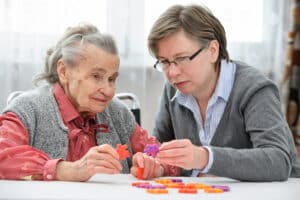
Bone health doesn’t always get the attention it deserves until something changes. For many seniors, osteoporosis develops quietly over time, only becoming noticeable after a fall or fracture. During Osteoporosis Awareness and Prevention Month, the focus shifts toward understanding how daily habits, movement, and support all play a role in maintaining strength and stability. Companion care at home fits naturally into that conversation by helping seniors stay engaged without feeling restricted.
The challenge with osteoporosis isn’t just physical – it’s how it changes the way someone moves through their day. A step that once felt automatic may now require more thought. A simple reach or turn might come with hesitation. Over time, those small adjustments can shape behavior in ways that aren’t always obvious at first.
When Confidence Starts to Shift
There’s often a moment—not always dramatic—when a senior begins to feel less certain on their feet. It might follow a minor stumble or simply come from an awareness that balance isn’t what it used to be.
That shift in confidence can lead to subtle changes. A person may move more slowly, avoid certain areas of the home, or limit how often they go out. These decisions are rarely announced, but they have a cumulative effect. Activity decreases, routines become smaller, and days begin to feel more contained.
What’s interesting is that the body often follows that pattern. Less movement can mean less strength, which in turn reinforces the hesitation that started it all.
Movement Still Matters—Just Differently
Staying active with osteoporosis doesn’t mean pushing beyond comfort. It means finding a balance between getting physical exercise and doing so safely.
That might look like walking shorter distances more frequently, taking time when transitioning from sitting to standing, or staying engaged in light daily tasks rather than avoiding them altogether. These small choices add up.
Companion care at home can support this balance by providing a steady presence during everyday movement. Not to direct or control, but to reduce uncertainty. When someone knows support is nearby, they’re more likely to keep moving in ways that feel manageable.
The Home Environment Tells a Story
Every home has its own character: how spaces are used, where items are placed, which areas feel most comfortable. When osteoporosis becomes a factor, that environment starts to matter even more.
A cluttered walkway that once went unnoticed may now feel like a concern. Poor lighting in the evening can change how confidently someone moves from room to room. Even reaching for commonly used items can feel different if balance is less steady.
Small adjustments in the home can quietly support safety:
- Keeping pathways clear and easy to navigate
- Placing frequently used items within comfortable reach
- Maintaining consistent lighting, especially in the evening
- Reducing the need for unnecessary bending or stretching
None of these changes feel dramatic on their own, but together they create an environment that supports movement rather than discouraging it.
The Role of Everyday Interaction
Osteoporosis doesn’t only affect physical movement – it can influence how connected someone feels to their surroundings. When activity decreases, interaction often follows.
Days can become quieter. Conversations may happen less often. Even routines that once involved others may gradually fade into more solitary patterns.
This is where presence matters in a very human way. Not structured or forced interaction, but simple, consistent companionship. A shared conversation during a meal. A familiar voice during a walk through the home. Moments that feel natural rather than scheduled.
Companion care at home supports this kind of interaction, helping seniors stay connected without making it feel like an obligation.
Independence Doesn’t Disappear, It Evolves
There’s a common concern that accepting help means giving something up. For many seniors, independence is closely tied to identity, and the idea of needing support can feel uncomfortable at first.
But independence isn’t static. It changes over time, just like everything else.
With the right kind of support, seniors can continue making their own choices, maintaining their routines, and living in their own space. The difference is that they don’t have to navigate every challenge alone.
That shift—from doing everything independently to doing things with support—often makes daily life feel more manageable rather than less.
Families Notice the Changes, Too
It’s not only seniors who adjust when osteoporosis becomes part of daily life. Families often notice changes early on—sometimes even before the senior fully acknowledges them.
There may be subtle signs:
Moving more carefully
Avoiding certain activities
Mentioning a fear of falling in passing
These observations can create concern, especially when family members can’t be present throughout the day. The question becomes less about what is happening and more about what could happen.
Having consistent support in place helps ease that uncertainty. It doesn’t replace family involvement, but it creates a layer of reassurance that makes daily life feel less fragile.
Routine Brings a Quiet Sense of Stability
There’s something grounding about a predictable day. Meals happen around the same time. Certain activities naturally follow others. Even small habits—like where someone sits or how they start their morning—create a sense of continuity.
Osteoporosis can disrupt that routine if movement becomes more difficult. Tasks may be delayed or avoided altogether, which gradually changes how the day unfolds.
Support helps restore that flow. Not by forcing structure, but by making it easier to maintain the patterns that already exist.
A Month That Encourages Awareness—and Action
Osteoporosis Awareness and Prevention Month isn’t only about understanding risk. It’s about recognizing how daily life can be adjusted in ways that support strength, safety, and confidence.
That support doesn’t have to feel clinical or restrictive. In many cases, it’s woven into everyday moments—how someone moves, how they interact, how they experience their home.
Companion care at home plays a role in that experience by offering consistency without disruption. It allows seniors to continue living in a way that feels familiar while adapting to changes that require a little more attention.
Assisting Hands Fremont provides companion care at home that supports seniors through daily routines, movement, and meaningful interaction. With the right balance of support and independence, seniors can continue to move through each day with confidence and a sense of control.
If you or an aging loved one are considering companion care at home in Union City, CA, contact the professional home care team at Assisting Hands. Call today: (510) 248-0188