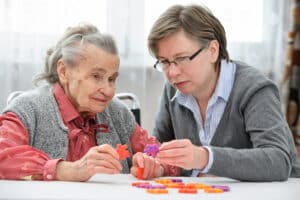
Social interaction plays a crucial role in maintaining and boosting cognitive function for individuals living with dementia. Research consistently shows meaningful social connections can enhance cognitive health and quality of life for dementia patients and their families.
Social Engagement Stimulates Brain Activity
Regular social interaction activates multiple areas of the brain simultaneously, creating a natural cognitive workout. When dementia patients engage in conversation, they must:
- Process language and interpret meaning
- Access memories to contribute to discussions
- Read facial expressions and body language
- Coordinate responses and maintain attention
This complex mental activity strengthens existing neural pathways and may even encourage the formation of new connections. The brain’s remarkable ability to adapt—known as neuroplasticity—means social stimulation can compensate for areas affected by dementia.
Aging in place can present a few unique challenges for older adults. Some only require part-time assistance with exercise or meal preparation, while others are living with serious illnesses. If your elderly loved one needs around-the-clock live-in careFremont. Our caregivers encourage seniors to focus on eating nutritious foods, exercising on a regular basis, maintaining strong social ties, and other lifestyle factors known to increase longevity.”>, turn to Assisting Hands Home Care Fremont. Our caregivers encourage seniors to focus on eating nutritious foods, exercising on a regular basis, maintaining strong social ties, and other lifestyle factors known to increase longevity.
Reducing Isolation Reduces the Risk of Accelerated Decline
Social isolation significantly worsens cognitive symptoms in dementia patients. Without regular human contact, they often experience:
- Increased confusion and disorientation
- Higher levels of anxiety and depression
- Faster progression of memory loss
- Decline in communication skills
Studies indicate socially isolated dementia patients show more rapid cognitive deterioration compared to those who maintain active social lives. The absence of meaningful interactions creates a downward spiral where worsening social skills lead to further isolation.
Familiar Relationships Provide Cognitive Anchors
Maintaining connections with family members and long-time friends offers unique benefits for dementia patients. These familiar relationships serve as cognitive anchors by:
- Triggering long-term memories that remain intact
- Providing emotional comfort and security
- Maintaining a sense of identity and personal history
- Offering opportunities for reminiscence therapy
When dementia patients interact with loved ones, they often access memories and personality traits that seem lost in other contexts. For example, a grandmother with dementia might have difficulty remembering recent events but light up when discussing her grandchildren’s childhood stories.
Professional caregivers with training and expertise in methods of cognitive stimulation can be a wonderful asset for seniors. Not every senior has the same care needs, which means they don’t all need the same type of home care in Fremont. Families can rely on Assisting Hands Home Care to provide individualized care plans to meet their elderly loved ones’ unique care needs. Our caregivers help seniors focus on healthy lifestyle habits such as eating nutritious foods, exercising regularly, and maintaining strong social ties, and we offer mentally stimulating activities that can boost cognitive health and delay the progression of dementia.
Structured Social Activities Enhance Daily Function
Organized social programs specifically designed for dementia patients provide structured opportunities for interaction while accommodating cognitive limitations. Effective activities include:
- Music therapy sessions that encourage singing and movement
- Art classes that promote creative expression
- Pet therapy programs that provide comfort and companionship
- Group games adapted for varying cognitive abilities
- Gardening activities that engage multiple senses
These structured interactions help seniors maintain daily living skills, boost mood, and create positive experiences they can enjoy despite their condition.
Communication Strategies Support Meaningful Connection
Effective social interaction with dementia patients requires thoughtful communication approaches. Caregivers and family members can enhance interactions by:
- Speaking slowly and clearly using simple sentences
- Maintaining eye contact and using gentle touch
- Focusing on emotions rather than factual accuracy
- Avoiding correction of minor mistakes
- Using familiar topics and shared memories as conversation starters
The goal shifts from perfect communication to meaningful connection. Even when words become difficult, emotional bonds and nonverbal communication remain powerful tools for social engagement.
Social interaction represents one of the most accessible and effective interventions for supporting cognitive health in dementia patients. By prioritizing regular meaningful social connections, families and caregivers can help them maintain a high quality of life.
Aging in place can present a few challenges for seniors living with dementia. However, with professional dementia care Fremont families can rely on, aging adults who have dementia can still live independently at home. Families can rely on Assisting Hands Home Care to provide their elderly loved ones with mental and social stimulation, timely medication reminders, assistance with meal prep, and much more. Our caregivers are available around the clock to help your loved one live a happier and healthier life. To talk to one of our friendly Care Managers and create a customized senior care plan, call us today.